
Those who have rented a car in Spain will know that, alongside your beach bag and snacks, there are always two other things rattling around in the boot – the mandatory breakdown warning triangles.
Since 1999, these triangles were the legally required way to signal a breakdown on Spanish roads. But as of 1st January 2026, Spain’s road safety rules have changed, and a new system has taken over.
From triangles to beacons
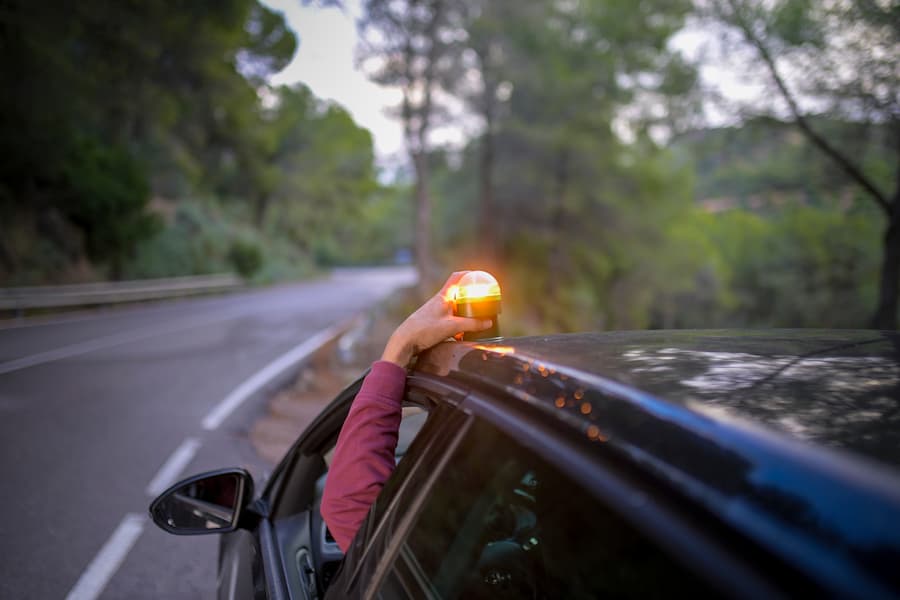
Over the years, stepping out onto the roadside to place the warning triangles has led to a concerning number of accidents. Recognising the risk, Spain’s traffic authority, the DGT (Dirección General de Tráfico), has introduced a safer alternative: the V16 emergency beacon, now mandatory for all vehicles registered in Spain.
These beacons allow drivers to stay safely inside their vehicles. The bright 360° light does a better job of alerting other road users, and many certified models include geolocation chips that automatically send your location to the DGT’s system when activated.
What this means for your trip
The Spanish authorities have made the rules clear, but the country still needs a moment to catch up. You’ll find that most of our providers have already updated their fleets with approved beacons, but with over 30 million cars on Spanish roads – and a strict approval process – a few providers are still waiting on backlogged supply.
So if you’re heading off for some early‑year sunshine, don’t be surprised if there isn’t a beacon in the glovebox just yet. You may still find the classic warning triangles in your boot.
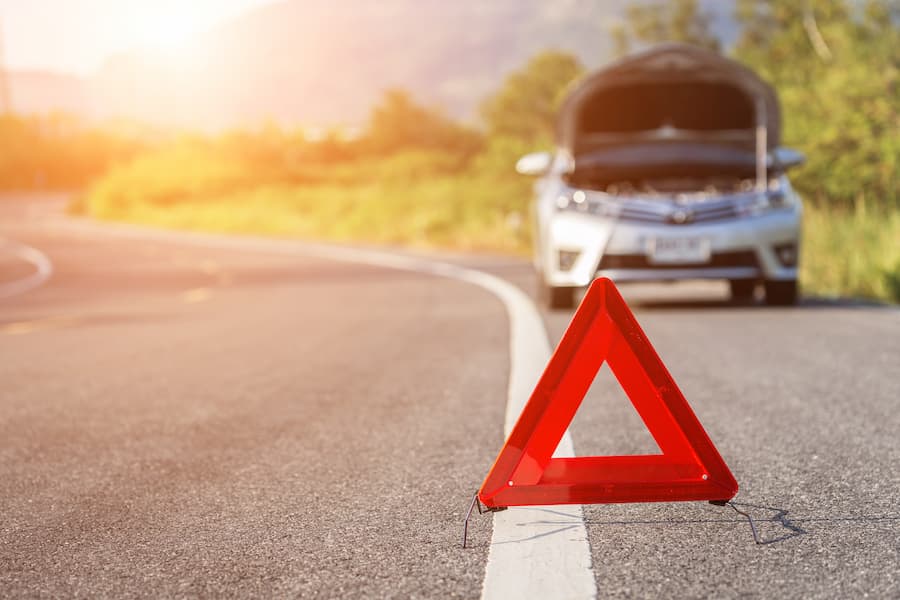
What happens if your rental car only has warning triangles?
These new regulations are still being phased in, and good news – there’s nothing you, as our customer, need to do. In the unlikely event that a fine related to warning triangles is issued during this period, it will be fully covered and refunded by our rental providers.
Please note that rental providers are only responsible for meeting the legal requirements of their own country. If you plan to drive across borders, it’s important to check the local regulations of your destination in advance.
In this case, the new law applies only to Spanish‑registered vehicles, so if you’re driving into Spain from a neighbouring country, you won’t be required to carry a beacon.
Contacting assistance
As mentioned above, the certified V16 emergency beacons come with geolocation chips that automatically send your location to the DGT the moment they are activated. However, it’s important to note that this signal does not trigger an automatic dispatch of breakdown or emergency services. If you find yourself in a situation where assistance is required, you will still need to contact your breakdown/car rental provider or emergency services yourself. You can find more information about that here: Blog – Contacting emergency services abroad
What the V16 beacon does do is ensure they can locate you much more accurately and quickly when needed, because the DGT can share that geolocation information with emergency responders if required.
The move to V16 beacons is one of the biggest updates to Spain’s road safety laws in decades, but you can count on Zest and your rental provider to handle everything behind the scenes.
So relax, enjoy your holiday, and hit the road knowing you’re up to date with Spain’s requirements. And if you do break down? Your modern little beacon will sit proudly on the roof and make sure you’re seen, safe, and supported.




That is a helpful article, but there is one open question – if you activate the beacon will someone come and help me? The advice in the uk is to get out if your vehicle and stand behind the barrier – sone there is room for more clarification on the use of the beacons.
Hi Ian,
That’s a great question, and I’m sure you’re not the only one wondering about this – I’ll make sure we add this clarification to the blog shortly.
Approved V16 emergency beacons with geolocation automatically send your location to the DGT the moment they are activated. However, it’s important to note that this signal does not trigger an automatic dispatch of breakdown or emergency services. You will still need to contact your breakdown/car rental provider, insurance assistance, or emergency services yourself.
What the V16 beacon does do is ensure they can locate you much more accurately and quickly when needed, because the DGT can share that geolocation information with emergency responders if required.
As for whether or not you should remain inside your vehicle, the DGT advises that drivers and passengers should remain inside the vehicle unless it is absolutely necessary to exit. This is to minimise the risk of being struck by passing traffic, particularly on fast roads. If you do decide to get out, we urge you to be extremely cautious and, as advised in the UK, to place yourself behind a barrier or as far away as safely possible.
I hope that answers your questions, but let me know if you would like anything else clarified.
Kind regards,
Katherine
Zest Car Rental